
'This was Indian land the PLA advanced on and occupied.' 'The Chinese then 'negotiated' a pullback of their troops a small distance on Indian territory even as Indian jawans draw back further into India from the forward position.' 'An apparently satisfied Indian government says this is a great move for peace! How great is that for China!'

A wise politician would disarm his critics, try to take them along, co-opt them, or, at least, take the criticism in his stride. Developing a thick skin ought to be an essential part of any politician's toolkit, notes Virendra Kapoor.

US Secretary of State Antony Blinken was asked by US Congressmen if the US had explore the possibility of northwest India for counter terrorism capabilities in Afghanistan. Blinken's remarks on India assume great importance, observes Ambassador M K Bhadrakumar

'The Pakistani side was so cocksure of itself that it had come to the table with a pre-set agenda -- an agenda of unilateralism, knowing full well that nothing was going to come out of these talks,' says Rajeev Sharma.
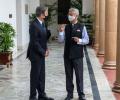
We do not know, because there has been no discussion, no transparency and most likely no real thinking on this matter at our end, observes Aakar Patel.
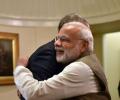
The camaraderie between Modi and Obama has taken the India-US relationship to unprecedented and transformative levels.

'The US will not want to tangle with China landwards.' 'Nor will the US confront the Chinese navy seawards on India's account.'

The Blinken visit indicated that the Biden administration is still somewhat tentative about the specifics of its relations with India, observes Ambassador T P Sreenivasan, who has served multiple stints at India's embassy in Washington, DC.

More than India's alignment with the Quad, India's defence cooperation and partnership with the USA is of critical importance, notes Rup Narayan Das.
Prime Minister Modi has entrusted Amit Shah with the task of coordinating all the agencies with their power to monitor movement and phone calls, says R Rajagopalan.

S Jaishankar, the new Indian Ambassador to the US, will arrive in Washington on Tuesday to take charge amid a raging diplomatic row over the arrest and strip-search of senior diplomat Devyani Khobragade on visa fraud charges.

'Frankly, India has no role to play.' 'This is a showdown between the US and NATO on one hand and Russia on the other.' 'That said, the outcome of this titanic struggle in Central Europe will remould the world order and affect India profoundly,' argues Ambassador M K Bhadrakumar.
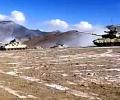
Once the tanks roll back, a zero-based assessment of future equations with China is necessary. Given the conflict situations that China is imposing on India time and again, the red, amber and green lines of interactions with China need to be laid down and communicated in no uncertain terms, asserts Srikanth Kondapalli, the leading China expert.
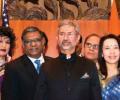
'Every index of the US-India relationship is pointing north. The time has come for us to set much more ambitious goals for ourselves,' says India's new Ambassador to the United States Dr S Jaishankar.

'Washington appears to be playing the long game, and making the argument to India that over the longer term, Russia -- sanctioned, cash-strapped, isolated by the West -- will no longer be a viable defence partner for India'
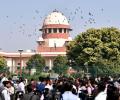
'Do the Muslims of India think that they are receiving justice from their nation and particularly from the Supreme Court?'
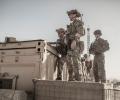
The Biden administration expects the Modi government to continue to remain as its loyal camp follower even as Washington continues to act in self-interests, observes Ambassador M K Bhadrakumar.

Heading G20 will give India a foreign affairs year like it has never had in history. You can trust Narendra Modi to exploit this to India's benefit. And, of course, to his own in his election year, explains Shekhar Gupta.
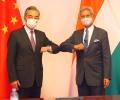
'We've never really been in the situation of having a difficult time with the Chinese and an increasingly difficult time with the Russians along with a relationship with the Americans which is important.'
'The Delhi-Washington stalemate can end only if India's concern over trans-border terrorism is addressed.' 'The Indian security establishment expects a spike in terrorist attacks in the months ahead.' 'And there is every likelihood that India may retaliate against Pakistan at some point,' observes Ambassador M K Bhadrakumar.

'Even as discord over US-India trade and commerce colours diplomatic relations, defence relations between the two countries remain on a firm footing,' points out Ajai Shukla.

SAARC summit in Islamabad in jeopardy. A SAARC summit can only take place when leaders of all member countries are present, notes Rajeev Sharma.

China remains the elephant in the room and has to be tamed, which the United States alone is unable to do and therefore calls allies to come on board.

Several Assamese-origin students studying in American universities met with Indian embassy officials to deliver a letter to President Pranab Mukherjee on the killing of over 32 Muslims in Assam as a result of election-related violence there. Aziz Haniffa reports

This visit has ended on a vastly different note in comparison with Modi's previous visits. Call it a rebuke, call it a censure, call it a distancing from Modi, the sharp message would have gone home, observes Ambassador M K Bhadrakumar.

'Gotabaya will expect India to observe the red line.' 'He even dispensed with any gesture welcoming India as an interlocutor on the Tamil issue.' points out Ambassador M K Bhadrakumar.

As the pandemic unfolded, the India-China relationship has come under severe stress. To restore normalcy, agreements between the two countries must be respected scrupulously in their entirety. Where the Line of Actual Control is concerned, any attempt to unilaterally change the status quo is unacceptable, declares External Affairs Minister Dr Subrahmanyam Jaishankar.

India's soft power diplomacy came into play during this cataclysm affecting the world as the pandemic defies barriers and borders, notes Rup Narayan Das.

Indians at large harbour a notion that their country is cherrypicking out of the American basket of goodies, but the policymakers in Delhi and the political leadership are well aware that it can only be a pipe dream since a military alliance with a superpower is a profound irrevocable commitment, observes Ambassador M K Bhadrakumar.
US-India defence cooperation must not adversely affect the India-Russia interface, which has its own strategic meaning and content, asserts Vice Admiral Premvir Das (retd).
'It may serve the interests of the rule of law if the Supreme Court were to appoint the UNHCR as amicus curiae in the CAA case,' notes Ambassador M K Bhadrakumar.

'Misplaced national priorities have brought the economy to a cul-de-sac,' says Ambassador M K Bhadrakumar.

Strengthening the portfolios of the home minister and the finance minister is a message that should not be missed, points out A K Bhattacharya.

'2020 will show whether India's troubled domestic economic and political house reveals a mismatch in their strategic association or whether closer strategic ties are yet possible,' says Anita Inder Singh.
'It is advisable for Indian interlocutors to follow the Chinese tactic of repeating the Indian position, both for the record and to test the Chinese negotiator's resolve and intentions.' A riveting excerpt from former foreign secretary Vijay Gokhale's The Long Game: How the Chinese Negotiate With India.

Trump can afford to say that COVID-19 is a 'China virus', but we can't expect Modi to say that aloud while his actions may speak louder, says Rup Narayan Das.

India-China relations have always attracted Parliament's attention and there have always been useful and productive and constructive discussions how to engage with China, notes Rup Narayan Das.

'India has to prepare for future warfare where kinetic use of force at the border will be limited. War will take place in the realms beyond the border.'
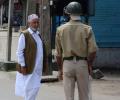
'Pakistan will leave no stone unturned to keep Kashmir on the edge and put the entire blame on the Government of India if there is any untoward incident,' says Brigadier Narender Kumar (retd).

Interestingly, in his entire remarks, Modi never once mentioned regional security, Ambassador M K Bhadrakumar points out.
